

Applications
Stainless steel pipes have a wide range of applications in various industrial fields, including but not limited to chemical, petroleum, natural gas, food processing, pharmaceuticals, shipbuilding, aerospace, and more. They are used to transport various fluids and gases, such as water, steam, and chemicals.
Materials and Characteristics
Stainless steel pipes mainly contain elements such as nickel and chromium, which give stainless steel excellent corrosion resistance and oxidation resistance. They can be used in harsh environments that require high temperature, pressure, and wear resistance.
Difference Between Pipes and Tubes
Pipes are generally used to transport fluids and gases, and their inner diameter (ID) is larger. Tubes, on the other hand, are mainly used for construction or support, and their outer diameter (OD) is larger. The manufacturing standards and specifications for pipes are often closely related to the requirements of the transported medium, while the requirements for tubes are more dependent on their use and structural design.
Stainless Steel Pipe Manufacturing Process
Steel Plate/Steel Coil Preparation
First, select stainless steel plates that meet the requirements, usually 304 or 316 stainless steel materials. The steel plates need to be cut and processed to appropriate sizes for pipe making.
Rolling into Pipe Shape
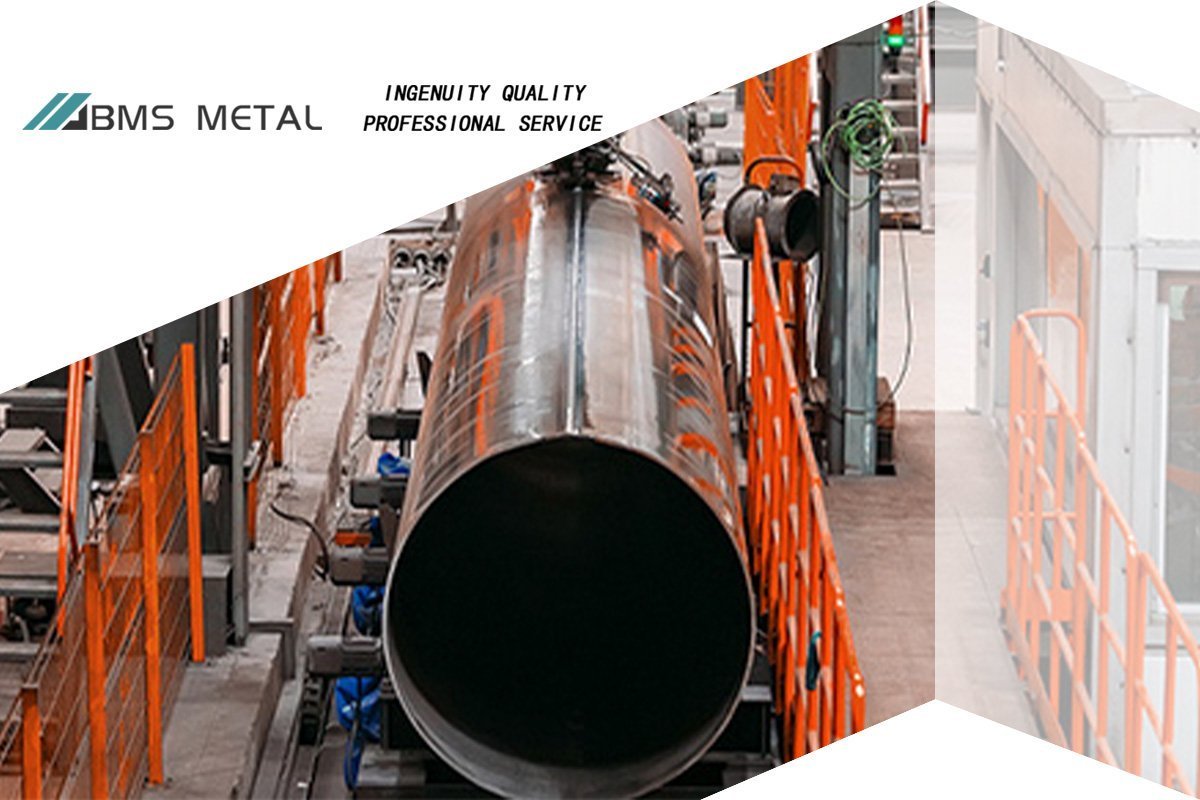
The cut steel plates are rolled into a circular pipe shape through a rolling machine. During this process, the ends of the steel plates will overlap, forming a pipe seam.
Welding
Next, the pipe seam is connected through a welding process. Common welding methods include TIG (Tungsten Inert Gas welding), MIG (Metal Inert Gas welding), and SMAW (Shielded Metal Arc Welding). After welding, the weld seam will be cleaned and polished to ensure the quality and appearance of the weld.
Pipe Shaping
After welding, the pipe goes through shaping and straightening processes to meet specified size and shape requirements. This may include rolling the pipe through a rolling mill or extruder to achieve the required wall thickness and diameter.
Surface Treatment
Finally, the pipe undergoes surface treatment processes, such as pickling, sandblasting, and polishing, to remove surface oxides, dirt, and impurities, thereby improving the surface quality and smoothness of the pipe.
Seamless Pipe Manufacturing Process
Billet Preparation
Select suitable stainless steel billets, usually round or square billets. These billets need to be heat-treated to improve their plasticity and workability.
Piercing (Extrusion Method)
Place the heated billet into a piercing machine and extrude it into a tubular shape under high pressure. During the piercing process, the diameter of the billet gradually decreases, ultimately forming a tubular shape.
Rotary Piercing (Drawing Method)
Another method for manufacturing seamless pipes is through the rotary piercing (drawing) process. In this process, the heated billet is drawn through a die, gradually forming a tubular shape. The shape and size of the steel are strictly controlled during this process to ensure the quality of the final pipe.
Heat Treatment
After forming the tubular shape, the pipe undergoes heat treatment to relieve internal stresses and improve its mechanical properties. This process usually includes annealing, normalizing, and other heat treatment processes.
Surface Treatment
The seamless pipes undergo surface treatment to remove surface oxides and dirt, thereby improving their surface quality. Common surface treatment methods include pickling, sandblasting, and polishing.
Specifications and Standards of Stainless Steel Pipes
ASTM A-312 and ASME SA-312
These are two important standard organizations managed by ASTM International (American Society for Testing and Materials) and ASME (American Society of Mechanical Engineers).
ASTM A-312
The ASTM A-312 standard specifies the chemical composition, mechanical properties, dimensions, manufacturing processes, and testing methods for stainless steel pipes. This standard applies to both welded and seamless stainless steel pipes, covering various applications and industrial fields, such as chemical, petroleum, natural gas, food processing, etc.
ASME SA-312
The ASME SA-312 standard is similar to ASTM A-312, also targeting stainless steel pipes, including similar chemical composition, mechanical properties, and dimension requirements. The ASME SA-312 standard is usually used together with the ASME Boiler and Pressure Vessel Code, having significant application value in pressure vessel and piping engineering.
Price of Stainless Steel Pipes
The price of stainless steel pipes is influenced by various factors, including raw material prices, manufacturing processes, dimensions and specifications, market supply and demand, etc. Prices can vary significantly for different grades and types of stainless steel pipes, requiring evaluation and comparison based on specific situations. The price of 304 stainless steel ranges from $2300 to $7000 per ton.
Common Applications of Stainless Steel Pipes
Food Processing
Stainless steel pipes are widely used in the food processing industry for transporting and handling various foods and beverages, such as milk, juice, beer, etc. Due to their corrosion resistance, easy cleaning, non-toxicity, and odorlessness, they are widely chosen.
Textile Industry
In the textile industry, stainless steel pipes are used to transport and handle textile materials, dyes, and chemicals, such as dyeing liquids and corrosive solutions. Their corrosion resistance and high-temperature performance make them ideal for the textile industry.
Breweries
In breweries, stainless steel pipes are used to transport and handle alcohol, fermentation liquids, yeast, and other raw materials and intermediate products. Their corrosion resistance and odorless properties are important for maintaining the quality of the brew.
Water Treatment Plants
Stainless steel pipes are used in water treatment plants to transport and handle various water qualities, including drinking water, sewage, and industrial wastewater. Their corrosion resistance and oxidation resistance allow them to operate stably in harsh environments.
Oil and Gas Processing
Stainless steel pipes play an important role in the oil and gas processing industry for transporting and handling crude oil, natural gas, chemicals, etc. Their corrosion resistance and high strength make them adaptable to complex working environments.
Fertilizers and Pesticides
In the production of fertilizers and pesticides, stainless steel pipes are used to transport and handle various chemical raw materials and intermediates. Their corrosion resistance and wear resistance allow them to withstand high concentrations of chemical solutions.
Chemical Applications
Stainless steel pipes are widely used in various chemical industrial applications, including pharmaceuticals, chemicals, laboratories, and more. Their stable chemical properties and corrosion resistance allow them to withstand various corrosive media.
Construction
Stainless steel pipes are commonly used in the construction industry for indoor and outdoor decoration, pipe transportation, etc. Their aesthetics and corrosion resistance make them a popular choice in modern architecture.
Pharmaceutical Industry
In the pharmaceutical industry, stainless steel pipes are used to transport and handle various drugs, solutions, and intermediates. Their hygiene, non-toxicity, and easy cleaning properties are crucial for ensuring the quality and safety of pharmaceuticals.
Automotive Components
Stainless steel pipes are used in the automotive industry for manufacturing exhaust systems, hydraulic systems, brake systems, and other components. Their corrosion resistance and high-temperature performance make them suitable for the requirements of automotive working environments.
Stainless Steel Square Tubes
Stainless steel square tubes are pipe materials made of stainless steel with a square or rectangular cross-section. These tubes are usually made from stainless steel plates through bending, welding, cutting, and other processing techniques. Due to their corrosion resistance, high temperature resistance, and aesthetic qualities, stainless steel square tubes have a wide range of applications in construction, decoration, chemicals, pharmaceuticals, and more.
Characteristics
Stainless steel square tubes are characterized by their smooth surface, precise dimensions, flat edges, and high strength.
Applications
Architectural Decoration
Stainless steel square tubes are commonly used in architectural decoration, such as indoor and outdoor railings, staircase handrails, window frames, and door frames. Their aesthetic appearance and good corrosion resistance make them a common material in modern architectural decoration.
Mechanical Manufacturing
Stainless steel square tubes are widely used in mechanical manufacturing, such as making various mechanical components, bearing seats, drive shafts, and more. Their high strength and rigidity make them suitable for mechanical structures with high material performance requirements.
Furniture Manufacturing
Stainless steel square tubes are commonly used in furniture manufacturing, such as making the main structural materials for tables, chairs, bed frames, wardrobes, and more. Their smooth surface and easy-to-clean characteristics provide advantages in furniture manufacturing.
Decorative Arts
Stainless steel square tubes are also commonly used in the creation of decorative artworks, such as sculptures, decorative frames, and display racks for artworks. The diverse shapes of square tubes and their ease of processing into various artistic forms make them suitable for decorative arts creation and design.
Food Processing
In the food processing industry, stainless steel square tubes are used as transport pipes and storage containers, such as for transporting food raw materials, processing liquids, and storing finished products. Their corrosion resistance and easy cleaning meet food safety and hygiene requirements.