

Introduction
Stainless steel metal plates are defined by their properties and significance in engineering.
Definition of Stainless Steel Metal Plates
Stainless steel metal plates are an alloy material with high corrosion resistance and excellent mechanical properties. They are mainly composed of iron, chromium, nickel, and other alloy elements. By adding these elements, they acquire rust-proof and corrosion-resistant characteristics, making them suitable for various engineering applications.
Importance of Stainless Steel Metal Plates
Stainless steel metal plates hold an irreplaceable position in modern industry. Their corrosion resistance, oxidation resistance, and high-temperature resistance make them widely used in chemical, medical, food processing, and other fields. Additionally, their aesthetically pleasing appearance and easy-to-clean characteristics make them ideal for architectural decoration and household items.
Differences Between Stainless Steel Metal Plates and Ordinary Steel Plates
Comparison of Material Composition and Properties
The primary difference between stainless steel metal plates and ordinary steel plates lies in their composition and properties. Stainless steel contains a higher proportion of alloy elements such as chromium and nickel, giving it corrosion resistance and high-temperature properties. In contrast, ordinary steel plates are mainly composed of iron and carbon, with poorer corrosion resistance.
Comparison of Corrosion Resistance
The corrosion resistance of stainless steel metal plates is far superior to that of ordinary steel plates. In humid and acidic environments, ordinary steel plates are prone to rust and corrosion, while stainless steel metal plates can maintain a long-lasting clean surface and stable performance.
Different Fields of Use
Due to their excellent corrosion resistance, stainless steel metal plates are widely used in fields that require high corrosion resistance, such as chemical, medical equipment, and food processing. Ordinary steel plates are more commonly used in general engineering fields such as building structures and machinery manufacturing.
Best Stainless Steel for Plates
Consideration Factors for Selection
When choosing stainless steel metal plates, factors such as corrosion resistance, strength, processability, and cost need to be considered. Selecting the most suitable stainless steel material requires a comprehensive evaluation based on specific application requirements.
Common Types of Stainless Steel Plates
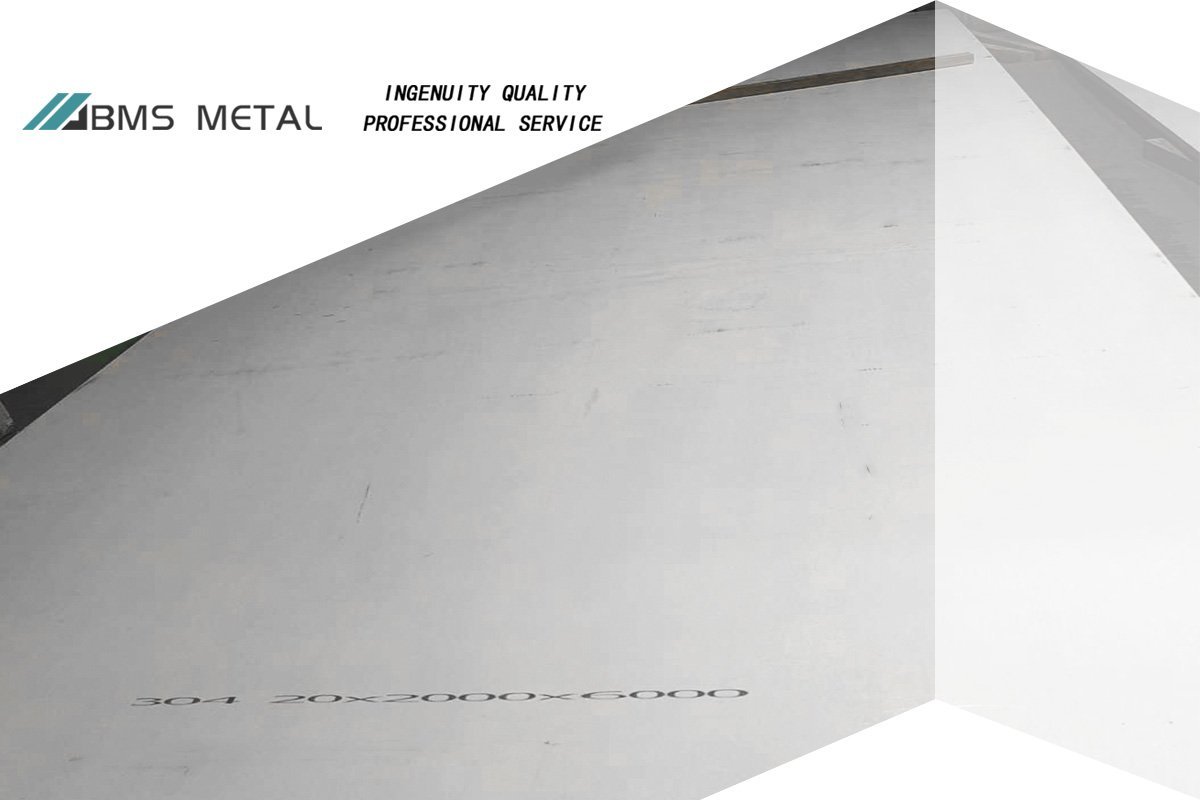
Common types of stainless steel plates include 304 and 316, each with different alloy compositions and properties, suitable for different environments and scenarios.
Best Application Scenarios
According to different material properties and application requirements, choosing the appropriate stainless steel metal plates is essential for ensuring safe and stable operation in fields such as chemical equipment, medical devices, and food processing, where high corrosion resistance is required.
Differences Between 304 and 316 Stainless Steel
Comparison of Chemical Composition
- 304 stainless steel primarily consists of chromium (Cr), nickel (Ni), and small amounts of carbon (C) and iron (Fe), with a chromium content of about 18-20% and a nickel content of about 8-10%.
- 316 stainless steel, compared to 304, contains higher proportions of chromium and nickel, with a chromium content of about 16-18%, a nickel content of about 10-14%, and 2-3% molybdenum (Mo).
Comparison of Physical Properties
- 304 stainless steel has good corrosion resistance and processability, suitable for general corrosive environments.
- 316 stainless steel excels in corrosion resistance compared to 304, making it particularly suitable for marine environments, chemical equipment, and other highly corrosive settings.
Usage Environment and Recommendations
- 304 stainless steel is commonly used in food processing equipment, kitchenware, and household decorations, suitable for most general applications.
- 316 stainless steel, with its superior corrosion resistance, is ideal for marine engineering, chemical equipment, and medical devices, where higher corrosion resistance is required.
Applications of 304 Stainless Steel
Industrial Applications
- 304 stainless steel is often used to manufacture chemical equipment, storage tanks, and pipelines, with widespread applications in the chemical industry.
Commercial and Consumer Goods Industry Applications
- Commercial kitchen utensils, cutlery, and dishwasher components often use 304 stainless steel. Its corrosion resistance and aesthetic appeal make it a preferred material for commercial kitchens.
Other Specific Applications
- 304 stainless steel is also used in architectural decoration, automotive parts, and medical devices. Its corrosion resistance and good processability make it widely used in these fields.
Conclusion
Summary of Key Points
- There are various types and application fields of stainless steel metal plates, with 304 and 316 stainless steel being the most common types. They have different chemical compositions, physical properties, and application scenarios.