

Reasons for Staining or Discoloration
Staining or Discoloration Due to Chemical Reactions
Stainless steel may undergo staining or discoloration under specific conditions, with one of the main reasons being chemical reactions. Understanding these reactions is the first step in preventing discoloration of stainless steel plates. Here are some common reasons related to chemical reactions:
Reaction with Acidic Substances
In industrial environments, exposure to acidic solutions can lead to staining or discoloration of stainless steel. To prevent this from happening, the following measures should be taken:
Use stainless steel materials that comply with national standards to reduce reactions with acidic substances.
Regularly inspect equipment and pipelines to ensure there are no signs of corrosion.
Avoid prolonged exposure to strong acidic environments.
Salt Corrosion
Salt corrosion is another common reason for staining stainless steel. To prevent this, the following preventive measures can be taken:
Use 316L stainless steel, which has higher resistance to salt corrosion.
Regularly clean the stainless steel surface to remove salt residues that may lead to corrosion.
Control humidity, especially in salt-laden environments, to reduce salt accumulation.
Staining or Discoloration During Heat Treatment
Apart from chemical reactions, the heat treatment process can also cause staining or discoloration of stainless steel plates. Here are some factors related to heat treatment and preventive measures:
Excessive Temperature
During heat treatment, excessively high temperatures can lead to staining or discoloration on the surface of stainless steel. To avoid this, it is advisable to:
Strictly control the temperature during the heat treatment process to ensure it does not exceed the tolerance range of stainless steel.
Use appropriate heat treatment equipment to ensure even temperature distribution.
Improper Cooling
Rapid cooling or improper cooling processes can also result in staining. To prevent this, it is recommended to:
Use suitable cooling media to ensure even cooling rates.
Perform proper annealing on stainless steel after heat treatment to mitigate potential staining.
Methods to Prevent Staining or Discoloration
In the steel industry, preventing staining or discoloration of stainless steel plates is crucial. To ensure product quality and compliance with national standards, here are some key methods to prevent staining or discoloration:
Application of Surface Protective Coatings
In stainless steel manufacturing, applying appropriate surface protective coatings is one of the key measures to prevent staining or discoloration. National standards require the use of specific types of coatings for certain applications. Here are some common protective coatings and their performance parameters:
Nickel or Chromium Plating Protection
According to national standards, in environments with high corrosion risks, galvanizing can be used to provide additional protection. The performance parameters of nickel or chromium plating include the thickness of the plating layer, adhesion, and corrosion resistance.
Importance of Cleaning and Maintenance
Regular cleaning and maintenance of stainless steel surfaces are essential to prevent staining or discoloration. Proper cleaning methods, including the use of appropriate cleaning agents and tools, can help maintain the stainless steel’s appearance and performance.
Control of Heating Temperature and Time
During heat treatment processes, controlling the heating temperature and time is critical to prevent staining or discoloration. Strict adherence to recommended temperature and time parameters can help avoid these issues.
Methods for Repairing Stained or Discolored Stainless Steel Plates
In cases where staining or discoloration has already occurred on stainless steel plates, there are methods available for repair. Here are some common methods for repairing stained or discolored stainless steel:
Surface Cleaning and Polishing
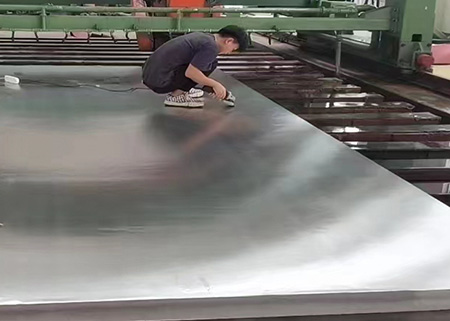
Surface cleaning and polishing can be effective in removing minor stains and discolorations from stainless steel. It involves the use of suitable cleaning agents and polishing tools to restore the surface’s appearance.
Chemical Treatment and Restoration
For more severe staining or discoloration, chemical treatments may be necessary. These treatments involve the use of specialized chemicals and processes to remove stains and restore the original appearance of the stainless steel.
Professional Restoration and Refurbishment Services
In cases of extensive staining or discoloration, professional restoration and refurbishment services may be required. These services are provided by experts who have the necessary equipment and expertise to restore stainless steel to its original condition.
By following these preventive measures and, if needed, employing appropriate repair methods, stainless steel plates can be effectively protected against staining or discoloration in the steel industry.
Please note that the specific choice of preventive measures and repair methods may vary depending on the type of stainless steel, the environment in which it is used, and the severity of staining or discoloration. It is important to consult with experts and follow national standards for best results.