

Introduction
In HVAC systems, the choice of materials plays a vital role in system performance and reliability. Stainless steel coils, as an important material, offer numerous advantages and find widespread applications in HVAC systems. This article will focus on exploring the advantages and specific application areas of stainless steel coils in HVAC systems.
Importance and Scope of HVAC Systems
HVAC systems play a crucial role in modern buildings. They not only regulate indoor temperature and humidity but also provide fresh air quality, creating a comfortable indoor environment. With the development of the construction industry, the demands on HVAC systems have been increasing.
Components and Working Principles of HVAC Systems
HVAC systems consist of components like air handling units (such as air conditioning units and fan coil units), piping systems (supply and return air ducts, hot and cold water pipes), and control systems (temperature, humidity, and airflow control devices). These components work together to circulate and treat air, adjusting indoor temperature, humidity, and air quality.
Stainless Steel Coil Applications in HVAC Piping Systems
In HVAC piping systems, stainless steel coils are commonly used for manufacturing supply and return air ducts, as well as hot and cold water pipes. Stainless steel coils exhibit excellent resistance to corrosion and high-temperature performance, effectively withstanding humidity, oxygen, and chemical corrosion in the air, ensuring the long-term stable operation of piping systems. For instance, 304 stainless steel coils are widely used in HVAC piping systems due to their good corrosion resistance and mechanical properties, meeting the requirements of HVAC systems for piping systems.
Stainless Steel Coil Applications in Heat Exchangers and Condensers
Heat exchangers and condensers are essential heat exchange devices in HVAC systems, used for transferring heat and cold. Stainless steel coils, owing to their excellent thermal conductivity and corrosion resistance, are frequently employed in the production of heat exchangers and condensers, ensuring efficient heat transfer and stable system operation. For example, 310S stainless steel coils are commonly used in high-temperature heat exchangers and condensers in HVAC systems due to their outstanding high-temperature performance and oxidation resistance, ensuring stable operation in high-temperature environments.
Stainless Steel Coil Applications in Air Ducts and Air Outlet Systems
Air ducts and air outlet systems are critical components responsible for conveying and distributing air in HVAC systems. Stainless steel coils, with their strength and durability, can withstand wind pressure and airflow impact, ensuring the stable operation of air ducts and air outlet systems. For instance, 316L stainless steel coils are commonly used in air ducts and air outlet systems due to their good corrosion resistance and resistance to salt corrosion, meeting the requirements of HVAC systems for humidity and chemical stability.
Advantages of Stainless Steel Coils in HVAC Systems
Corrosion Resistance and High-Temperature Resistance
Stainless steel coils exhibit excellent corrosion resistance and high-temperature performance. This allows them to operate stably in HVAC systems for an extended period, without concerns of corrosion or performance degradation.
Thermal Conductivity and Coefficient of Thermal Expansion
Stainless steel coils possess good thermal conductivity and coefficient of thermal expansion, effectively conducting and distributing heat. This enables stainless steel coils to efficiently transfer heat and cold, improving system energy efficiency and performance stability.
Heat Conduction and Thermal Stability
Stainless steel coils have excellent heat conduction performance, enabling rapid heat transfer and enhancing the response speed and temperature control accuracy of HVAC systems. Additionally, stainless steel coils have high thermal stability, maintaining stable performance in high-temperature environments, ensuring the long-term stable operation of the system.
Durability and Anti-Aging Performance
Stainless steel coils have a long service life and excellent anti-aging performance. They can resist oxidation, corrosion, and wear, prolonging the service life of HVAC systems and reducing maintenance and replacement frequency.
Maintenance Requirements and Costs
Stainless steel coils in HVAC systems have low maintenance requirements and do not require frequent cleaning and maintenance. This reduces maintenance and operating costs while improving system reliability and cost-effectiveness.
Application Examples from Specific Steel Plants
Material Characteristics and Application Range of 304 Stainless Steel Coils
304 stainless steel coils are commonly used stainless steel materials with good corrosion resistance and mechanical properties. They are suitable for key components in HVAC systems such as piping systems, heat exchangers, and condensers.
Specific Application Cases of 304 Stainless Steel Coils in HVAC Systems
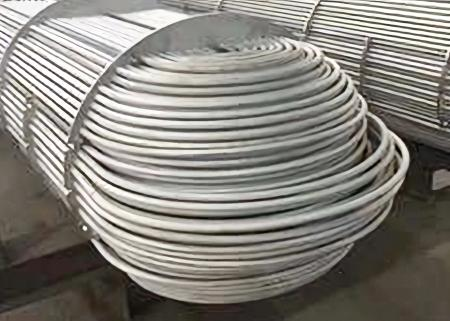
A certain steel plant used 304 stainless steel coils to manufacture supply and return air ducts and hot and cold water pipes in HVAC systems. Due to the excellent corrosion resistance and high-temperature performance of 304 stainless steel coils, these pipes can operate stably for an extended period, ensuring the normal operation of the system.
Material Characteristics and Application Range of 310S Stainless Steel Coils
310S stainless steel coils are high-temperature corrosion-resistant stainless steel materials with excellent high-temperature performance and oxidation resistance. They are suitable for key components in HVAC systems such as high-temperature heat exchangers and condensers.
Specific Application Cases of 310S Stainless Steel Coils in HVAC Systems
A certain steel plant used 310S stainless steel coils to manufacture high-temperature heat exchangers and condensers in HVAC systems. Due to the outstanding high-temperature performance and oxidation resistance of 310S stainless steel coils, these devices can operate stably in high-temperature environments, ensuring efficient heat transfer in the system.
Conclusion
Summarizing the Advantages and Application Areas of Stainless Steel Coils in HVAC Systems
Stainless steel coils possess advantages such as corrosion resistance, thermal performance, and longevity, making them suitable for key components in HVAC systems such as piping systems, heat exchangers, condensers, air ducts, and air outlet systems.
Emphasizing the Importance of Corrosion Resistance, Thermal Performance, and Longevity of Stainless Steel Coils in HVAC Systems
The corrosion resistance and thermal performance parameters of stainless steel coils are crucial for the performance and reliability of HVAC systems. Selecting the appropriate stainless steel coil material and specifications can enhance system energy efficiency and stability.
Reminding to Choose the Right Stainless Steel Coil Material and Specifications to Meet Specific Application Requirements
When selecting stainless steel coils, it is essential to consider specific application requirements, such as corrosion resistance, high-temperature resistance, and thermal conductivity. Choosing the right stainless steel coil material and specifications based on different application scenarios ensures system performance and reliability.
Outlook on the Future Development Trends and Innovative Applications of Stainless Steel Coils in HVAC Systems
With the development of the steel industry and technological advancements, stainless steel coils in HVAC systems are expected to witness more innovation and development. Future stainless steel coils may have even higher corrosion resistance, superior thermal performance, and longer service life, providing better performance and reliability for HVAC systems.